
Tables
A table is a decision you sit at for decades.
Dining tables, live-edge tables and occasional tables, each sized to the people around it, the chairs under it and the room it has to share.
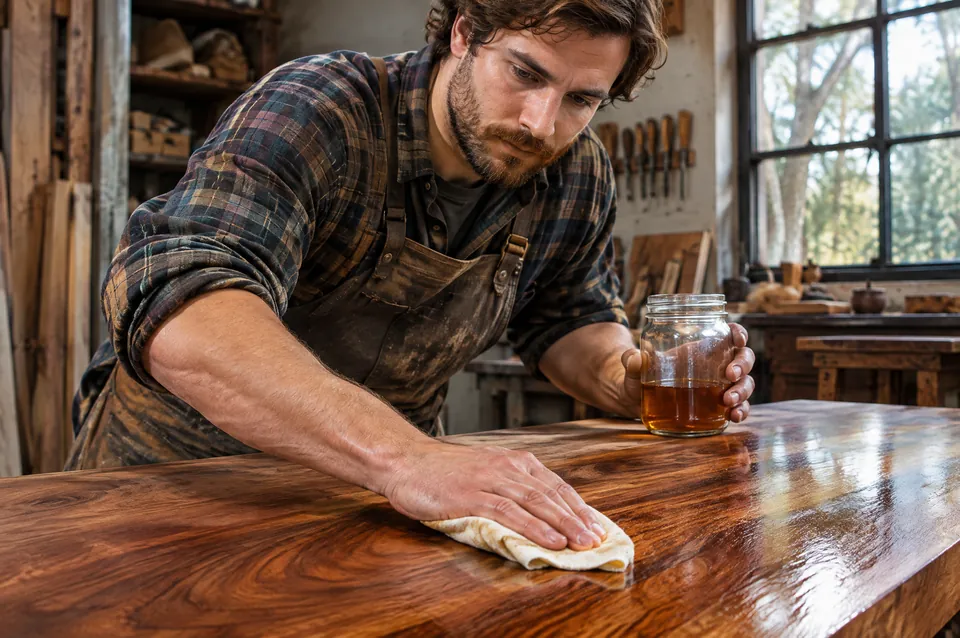
- Dining
- Live-edge
- Coffee & side
- Benches to match
01 — Kinds of table
Three tables, three different problems.
A dining table is about reach and knees. A slab table is about the tree. A coffee table is about the eye, because you see it from above all day.
01
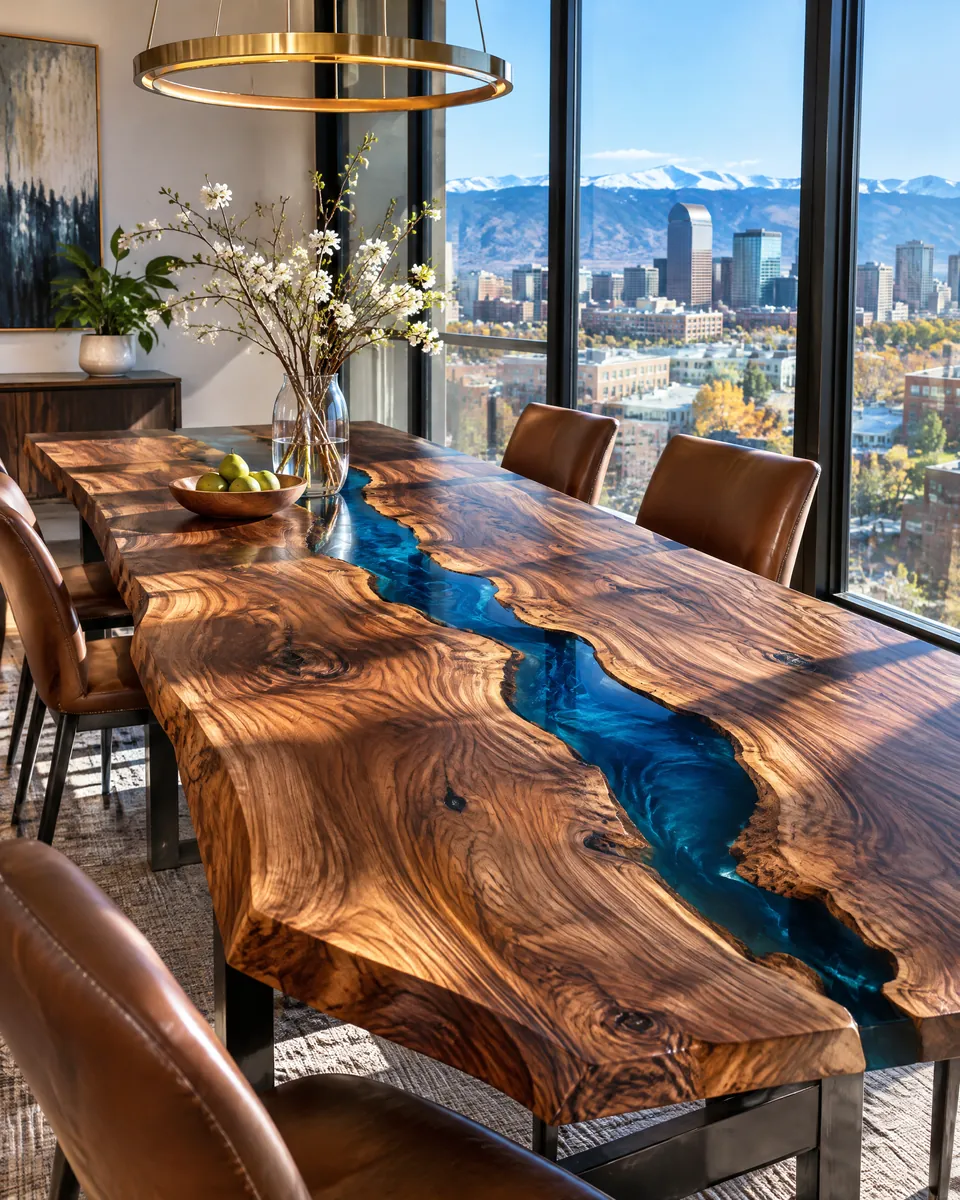
Dining tables
Rectangular, oval or round, on trestle, pedestal or four-leg bases. Top thickness, overhang and leg position decide how a table feels long before anyone notices the wood.
Illustrative image
02
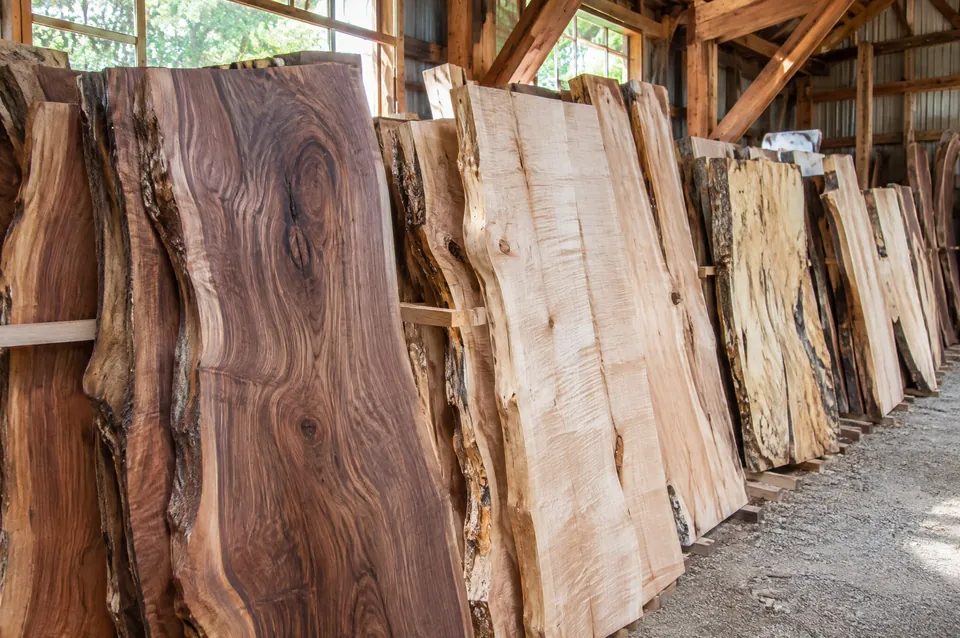
Live-edge tables
A single slab or a book-matched pair, the natural edge kept and the bark removed. Checks are stabilised with keys or resin, never hidden under filler.
Illustrative image
03
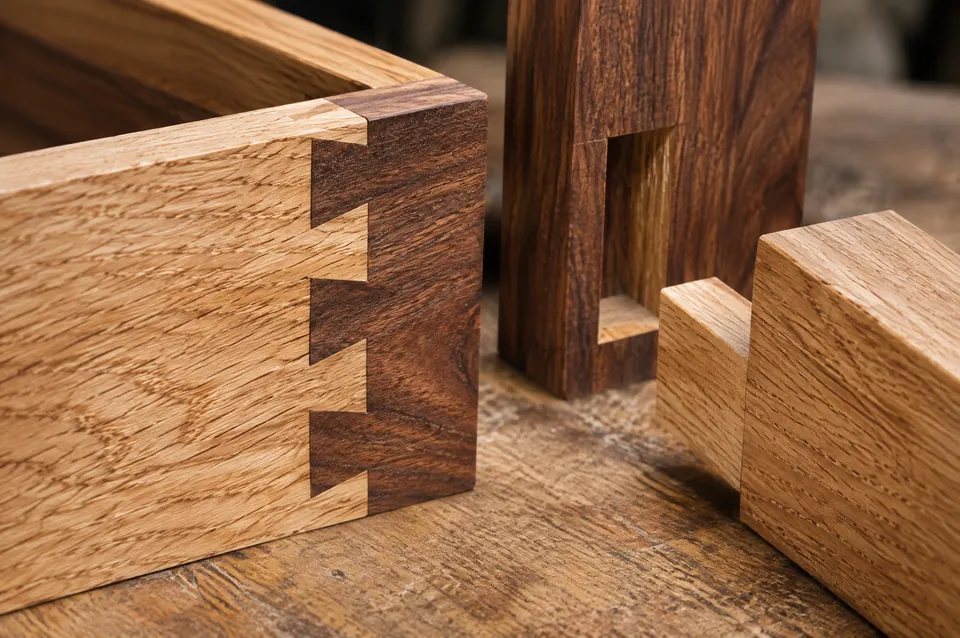
Coffee & side tables
Lower, closer to the eye and handled more than any other table. This is where joinery, edge profile and grain matching show most.
Illustrative image
02 — Sizing, before we draw
The numbers that make a table comfortable.
Common guidelines, not rules. Every drawing starts from them, then adjusts to your chairs, your room and how you actually eat.
- Width per person
- About 24 in (61 cm) of edge per diner; closer to 30 in (76 cm) with armchairs.
- Height
- 29 to 30 in (74 to 76 cm) for dining, with roughly 12 in (30 cm) between seat and tabletop.
- Clearance
- About 36 in (91 cm) from table edge to wall so chairs pull out without a fight.
- Knee room
- Aprons and stretchers placed so knees and armrests clear them; a thicker top can mean a shallower apron.
- Top thickness
- Chosen for span and look: thinner reads lighter, thicker suits slabs and long spans. Edge profiles can make one look like the other.
03 — Joinery & bases
Tables fail at the base, not the top.
- 01
Mortise and tenon
Legs and aprons joined with long-grain glue surfaces and enough shoulder to resist racking, the sideways shove every table gets when chairs are pushed in.
- 02
Trestles that knock down
Long tables can be built to come apart for delivery through narrow doors and stairs, then pulled tight again in the room.
- 03
Room for the top to move
Solid tops swell and shrink across their width with the seasons. They are fastened with slotted hardware or wooden buttons so they can move without splitting.
Have a room and a rough size?
That is enough for a first drawing conversation.
Start a commission